Confession time: I’ve been messing around on TikTok this year after COVID crashed my business networking plans.
Gary Vaynerchuk is completely to blame. For a while he’s been pushing business owners to use TikTok as a way to get amazingly wide and free content reach.
I finally caved when I had to admit I had some free time open up. Thanks, Global Shutdown. PFFT.
I started a personal account and a business account but didn’t really do much with either for the first several months.
Erin McDermott’s TikTok account can be found @erinmmcdermott
More recently, I began using the app more and I saw how many niche content creators were building strong, focused audiences.
Below is a TikTok I made about…this TikTok phenomenon. Oh, we’re getting meta now.
After noticing other successful users of this app — some even with super strange niches — I decided to give it more attention. I started posting more regularly on my personal account.
And then one of the videos took off.
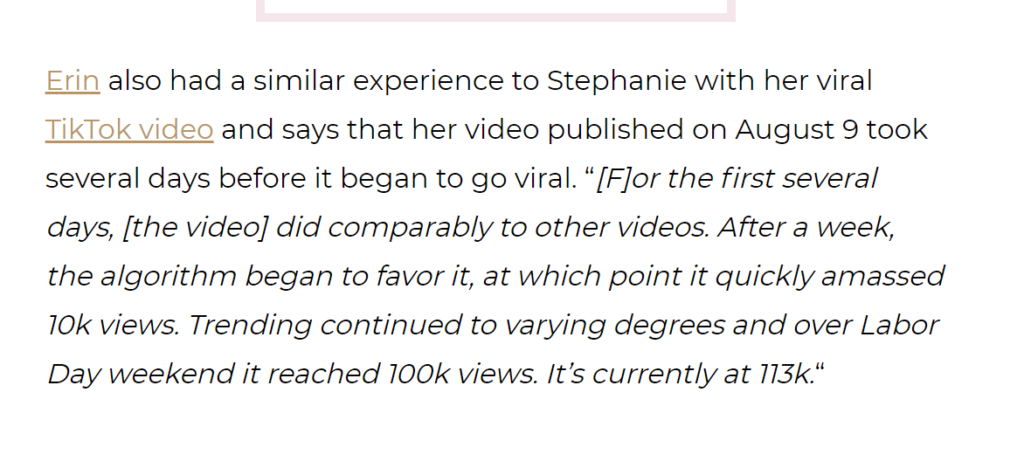
No, not with 5 million views, or even 500k, but this video below now has over 115,000 views, and hey — I think that’s more reach than for any other single piece of content I’ve ever produced. And I write for 2 magazines!
This is the one, the only one, that everyone really likes. 🙂
This whole story about my viral-ish video even made news on this other website, DanaNicoleDesigns.com:
SO OK, FINE, GARY. YOU WIN. I’ll work on my professional TikTok account under my business name, too: @spirestarter
So far, I’ve been working on quick, but valuable tips for freelance engineers on the account for Spire Starter, and humorous engineering things that non-engineers probably don’t get.
One of those is “The Engineer’s Curse” which was one of my first pieces for Solid Smack. Back then, I focused on engineering designs that weren’t done well enough. Recently, however, I realized The Engineer’s Curse can extend into over-engineered products — such as a microwave that doesn’t shut the hell up:
Recently, I attended a virtual meeting of Internet Marketing Party. One of the guest speakers, Rachel Rofe, was talking about how to hawk mugs successfully on the interwebs.
Some of the takeaways were: look for categories of things that are trending in sales, but kind of niche then jump on that bandwagon. Use the existing trends on popular sales platforms such as Amazon and Etsy as your marketing. Don’t buy advertising directing to a merch page. It never pays off.
Another was that fulfilling a niche need is even more important in getting a sale than the quality of the graphic or text.
I started with several different creations on Gearbubble and tried to get the free-to-signup Amazon Seller Account (the Individual Seller Account).
Amazon totally screwed me with the seller account, charged me without my authorization, and that situation is still currently a mess. So I abandoned both companies.
Then I went to Teespring and moved some of the designs over for my engineering company’s store. Reviews seem to favor Teespring’s and Printful’s product quality and customer service over Gearbubble’s, so the hassle of the switch seemed worth it.
After I created a few designs and posted about them on Twitter, Facebook, Instagram, TikTok and LinkedIn, I actually got a few direct sales on my Teespring page!
Etsy, however, got me nada. In fact, I can’t even find my products when I’m intentionally trying to find the exact thing I made in Etsy’s search tool!
So, I guess the better way for me to go right now is personally driving traffic to the Teespring page through “free advertising” which is my own content published to my own network.
I thought I could “niche down” around engineering, product development and management for my Teespring company store that I would link to from my company website – SpireStarter.com .
For this “WORLD’S BEST PROJECT MANAGER” design, see the Swag Store tab on SpireStarter.com
BUT! I have all these other designs and artwork that I could turn into mugs, too. And in the past, I’ve had friends tell me they’d like to purchase some of my artwork, but the high quality art prints I had for sale were too expensive.
A mug, though? That’s not too expensive!
So I created a separate Teespring store for my more whimsical or artistic designs under my name. Two of the babies below already sold:
Have a look at this lovely model with her new #coffeetawk mug going to Linda Richman town like it was buttah:
Here’s a thing that happened: in 2020, the United States shut down, and imposed far-reaching restrictions on its citizens due to what officials considered a health threat. At the same time, the censoring of groups of licensed doctors who believe they have valuable feedback for the country — including other doctors — became acceptable to many.
What in the actual fuck. ?
If you haven’t heard — and that’s quite possible since it was censored with an iron fist — a group of practicing doctors from different parts of the United States got together on Capitol Hill to send a message last week. This group is called “America’s Frontline Doctors”. They personally treated hundreds of COVID-19 patients and they believed they had urgently important information for their fellow physicians. Additionally, they expressed concerns over a different kind of censorship; they said their ability to practice medicine in a traditional manner was being irrationally impinged upon.
I stumbled upon a Twitter message that linked to the video discussed here. And as of publishing this post, you can still find the coverage of the presser on Vimeo here (if you dare watch this “shocking” footage):
Me:“Wow, doctors treating coronavirus on the frontlines traveled to D.C. to deliver a message to the world?! Well, I want to hear that! Primary information sources are my favorite sources! There is so much less bullshit sprinkled in…”
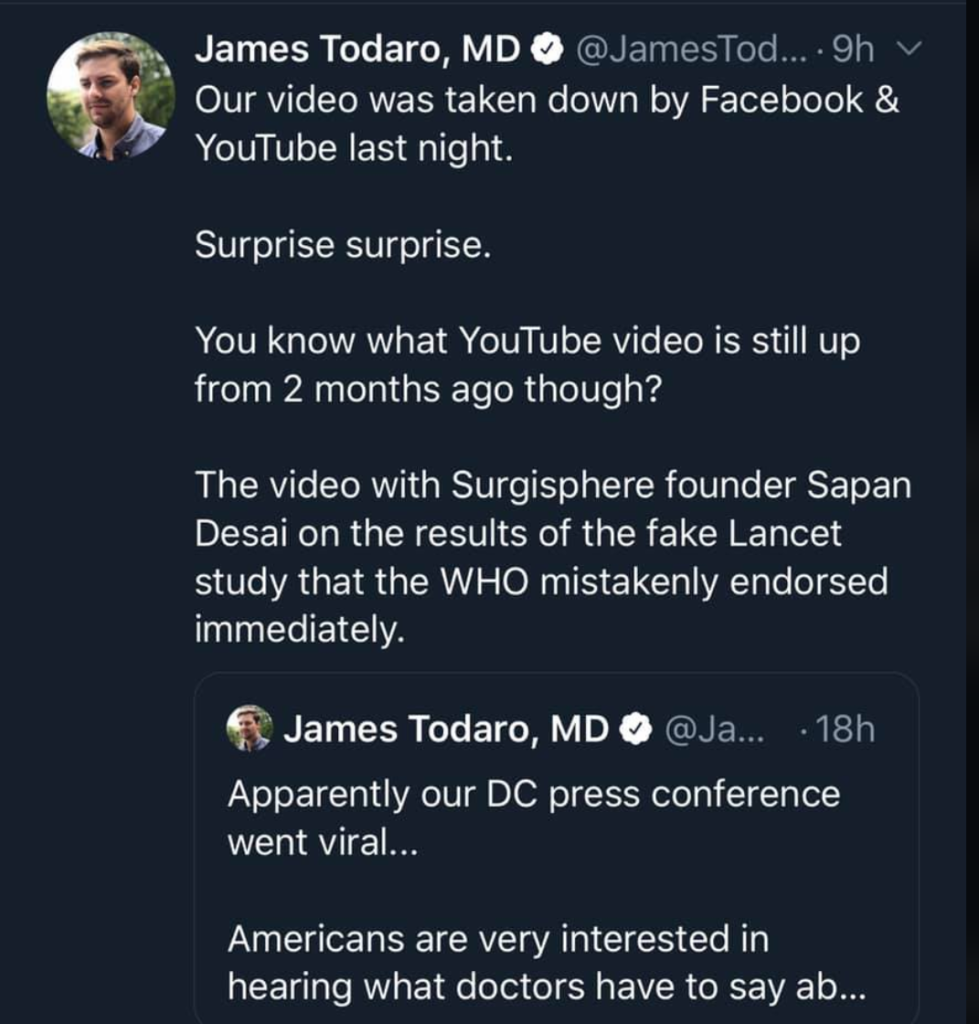
And apparently, I wasn’t the only one keenly interested in hearing what these professionals had to say. While I can’t confirm a tally of how many views the press conference received now because the video was removed by Facebook, that one reportedly reached over 17 million viewers.
When I came across it, I let it play in the background as I worked on other things. It wasn’t until much later in the video that I realized I was listening to a Breitbart stream. Turns out, it would be highly unlikely I could have heard these people anywhere else. And then, it got even harder to hear their voices. YouTube, Facebook, Twitter, and Squarespace cut them down with their various powers.
@JamesTodaroMD on Twitter letting the world know about content removal on YouTube and Facebook.
Words to Excuse the Inexcusable
When I posted about this censorship on Facebook to take the pulse of the masses, I got many vitriolic comments of meandering logic. Here were the main trains of…thought.
“But the Law Makes It OK”
There was the proclamation that “well, legally it’s OK”.
In actuality, no, that’s not necessarily true. But even if what the goliath publishers…er…sorry, I mean “platforms” did was hunky-dory legally without taking away their platform status, that still wasn’t my main concern. Here is my horror: some American citizens are cool with doctors being silenced during a life-halting pandemic.
Insert communal shoulder shrug.
At a time when cancel culture cares not whether a company crossed a legal boundary, and only if the mob perceives a crossed moral boundary, how is it these megalithic publishing, sorry, “platform” establishments escape unscathed?
That is the only quandary I ask the masses to wrestle here. I don’t care if what these licensed doctors suggest other MD’s investigate is an ultimate answer to our problem or not. I wouldn’t even care if I felt 100% that what these doctors said was ludicrous. Free dialogue itself is important. It’s for times like these especially that free speech was written in blood at the tip-top of the United States Constitution.
And no, I’m not saying that what these companies did is necessarily unconstitutional. I’m only pointing to the pure, undeniable, and moral importance and purpose of free speech’s existence.
“It’s Not Really Censorship”
Further, I was mocked for not understanding the meaning of “censorship”.
FYI, yes, it is still called censorship even when it is not a governmental body doing the silencing. Auntie Erin, for example, tries very hard to censor her own potty mouth around her surrogate nieces and nephews.
“I Personally Think the Religious Beliefs of One of Them is Silly”
Then, there was the outrage over one of the several doctor’s religious beliefs.
OK, so now censorship of licensed doctors is OK but only when you don’t share their religious beliefs? I disagree.
I don’t care what religion these docs practice. If one of them drives to the middle of Kansas 3 times a year to sacrifice a goat to their idol god while dancing naked around a fire, drinking Everclear from the bottle and singing “Sweet Home Alabama” it matters not. If we’re in a pandemic and that doctor successfully treated 350 patients suffering from the illness in question, I still want to hear what that person has to say.
Would I want to know about the other thing and would I watch video footage of it? Yes, and maybe — it depends how attractive they are. But that’s irrelevant to what they have to share about their first-hand experience of treating several hundred patients on the “frontline”.
“Any Opinion Not Promoted by Mainstream News is a Conspiracy Theory”
Others on the FB shouting hall started throwing around the term “conspiracy theory” like it was a slur. However, I’m pretty sure that’s not what we’re dealing with here. Censorship can be pretty clearly seen to have happened on Twitter. Additionally, a Facebook employee publicly and proudly admitted taking down footage of those speeches made in Washington, D.C.. Again, I’m only concerned with the act of silencing doctors.
“Wanting all Sides to Be Able to Speak on a Subject is Proof of Confirmation Bias”
My favorite comment from the peanut gallery was that I was told I only read content that would satisfy my apparent confirmation bias. Confirmation bias regarding what, exactly? That a gathering where degreed, licensed, actively-practicing doctors speaking to the public was blocked by many publishers…er… platforms? Can we not agree this happened?
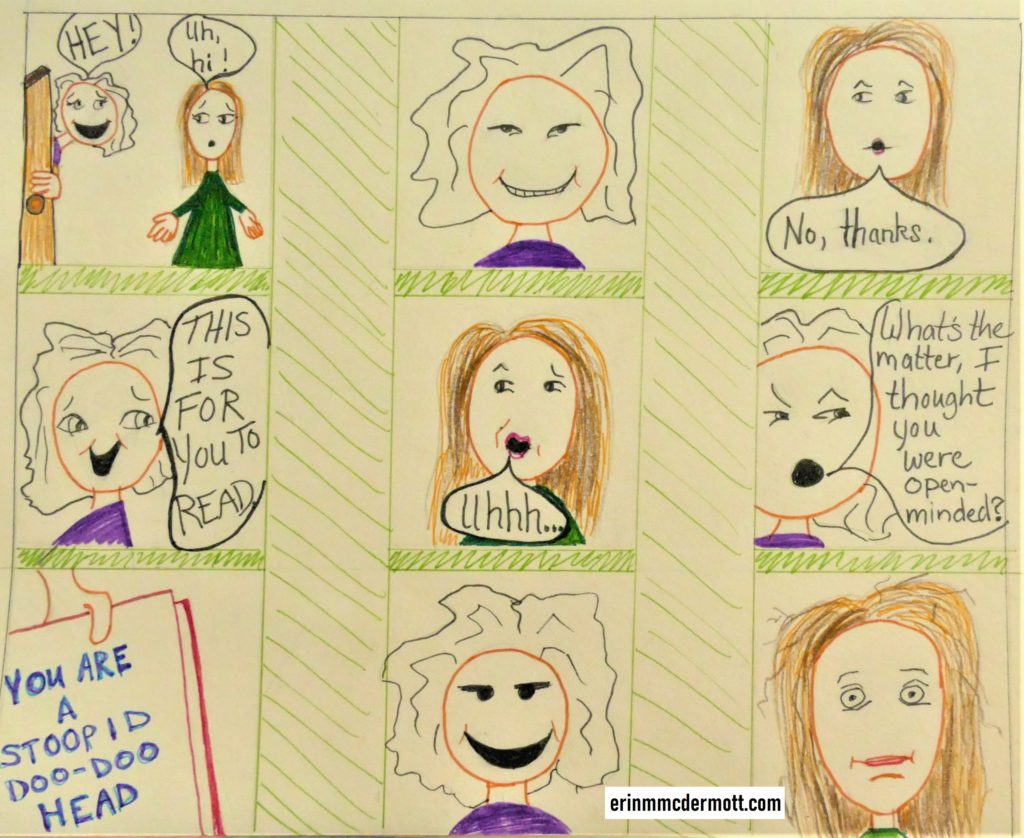
As I mentioned there, and which was obviously lost in the over-100-comments fray, I read all angles. That is, I did up until I was done herding the comment cattle back to the original focus for 3 days. After a point, I couldn’t bare 1 more blood-pressure raising Idiocracy quote. Yes, it’s true that after 3 days, I received one more link I was told I needed to read and I didn’t read it. The title itself was a derogatory, anti-Christian straw man in the context of this convo. That was enough of that Medium article.
As I said there, I’ll repeat here:
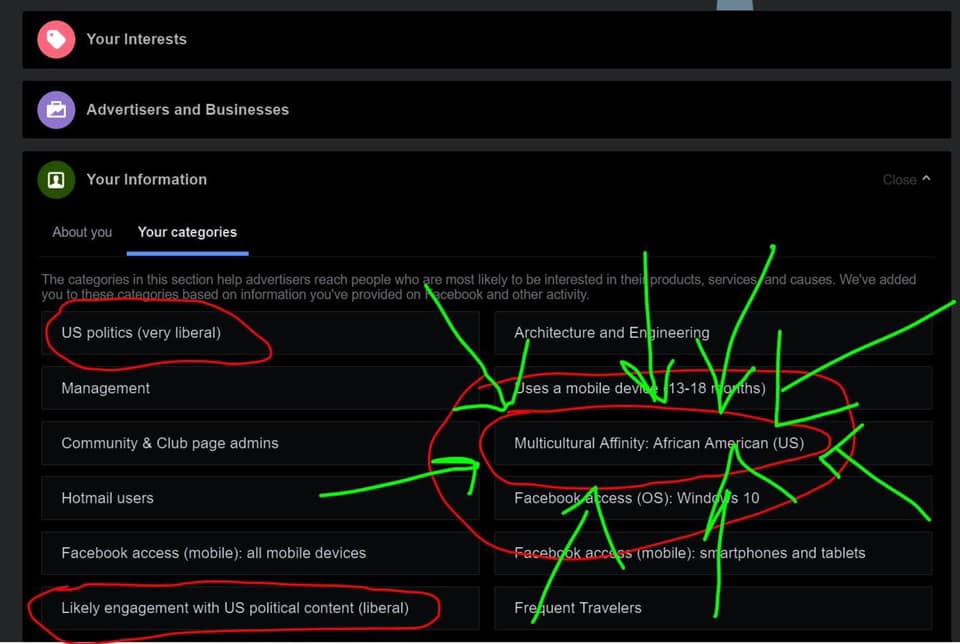
When something happens in the news, you usually won’t see me comment right away. I have a superpower of being able to reserve judgment and remain open-minded on a matter for an extremely and abnormally long amount of time. I consider evidence from all sides — **to the point that Facebook’s algorithm thinks I politically lean the exact opposite of how I actually lean**. I read the full article. I listen to the public hearings in full, without biased commentary or editing as much as possible, to preserve the integrity of the source. I don’t rely on pundits for bullet points and argument “gotchas” to use as a regurgitated debate weapon; I come to my own conclusions.
In fact, here is my laughably inaccurate Facebook Big Brother data which I believe is largely calculated by content a user engages with:
When I first captured Facebook’s read-out of its algorithms synopsis of me, I didn’t even notice that my “Multicultural Affinity” was set to African American. Keep up the great work, FB! I will not correct you.
Unfortunately, after reading many of the opinion-pieces-disguised-as-unbiased-reporting which my friends throw up links to, I know I don’t have many like-minded acquaintances. Reading one of these is like tuning into an old-school MTV’s Real World episode!
I imagine the editors directing their “journalists” this way:
What I want to see is jump-cuts galore! Cue dramatic music. Cut this person off at the beginning of her sentence. Good. Now again at the end. Perfect. Now let’s write an entire opinion piece wildly misrepresenting the intended meaning of that quote. Make it 3 pages long. What’s that? Oh, no, don’t worry; you’re safe! No one will check the original source. They’ll read the headline, take our word for it and spend more time in their own comments section berating the subject than they did ingesting any original content. Remember they’re not seeking truth. Haha! Oh goodness, no. They’re only interested in intellectual masturbation and we provide the lube.
– The mainstream media news editor in my imagination
Stories are chosen and told in a way to satisfy the narrowest of audiences, rather than to allow a curious public to read about the world and then draw their own conclusions.
– Bari Weiss in her NYT resignation letter
“You Only Want All Sides of an Issue to Be Heard Because Your Political Affiliation Makes You Biased”
Back in the Facebook war room, accusations of my confirmation bias somehow turned into comments about politics. Or perhaps that was a different thread on the post. I’m not sure; it’s all a blur now. But in any case, talk targeting my personal political persuasion also came up.
For the record, I am not a Republican. A lot of people are perplexed about which “side” I’m on and ask. Others make assumptions — incorrectly — most often that I’m a far left-leaning Liberal. So here it is as best I can describe. I am registered Independent and for the past several years I was a practicing Apathetic. In the last presidential election I voted “Stayed Home And Drank”. Look, I even made an awesome graphic about it back then:
However, if you’d put a gun to my head that day and made me actually pull a lever, I would have voted for “DEFINITELY NOT HILLARY”. The last presidential election in which I voted before that was in 2008, and I literally voted for Bugs Bunny.
I stand by that vote. He would have made a damn fine president. (And he wouldn’t have fined me for being poor when I was struggling and chose not to purchase health insurance, either. AH-HEM.)
So, in summary, I am skeptical of all politicians and agendas and people in power and I investigate all the things I speak or write on. I have no political horses in this race.
In any case, however, why is this being thought of as a partisan issue?!?! The uncensored speech of doctors should not be a political topic!
“Speech Should Be Suppressed Because I Haven’t Heard Similar Speech that Was Not Suppressed”
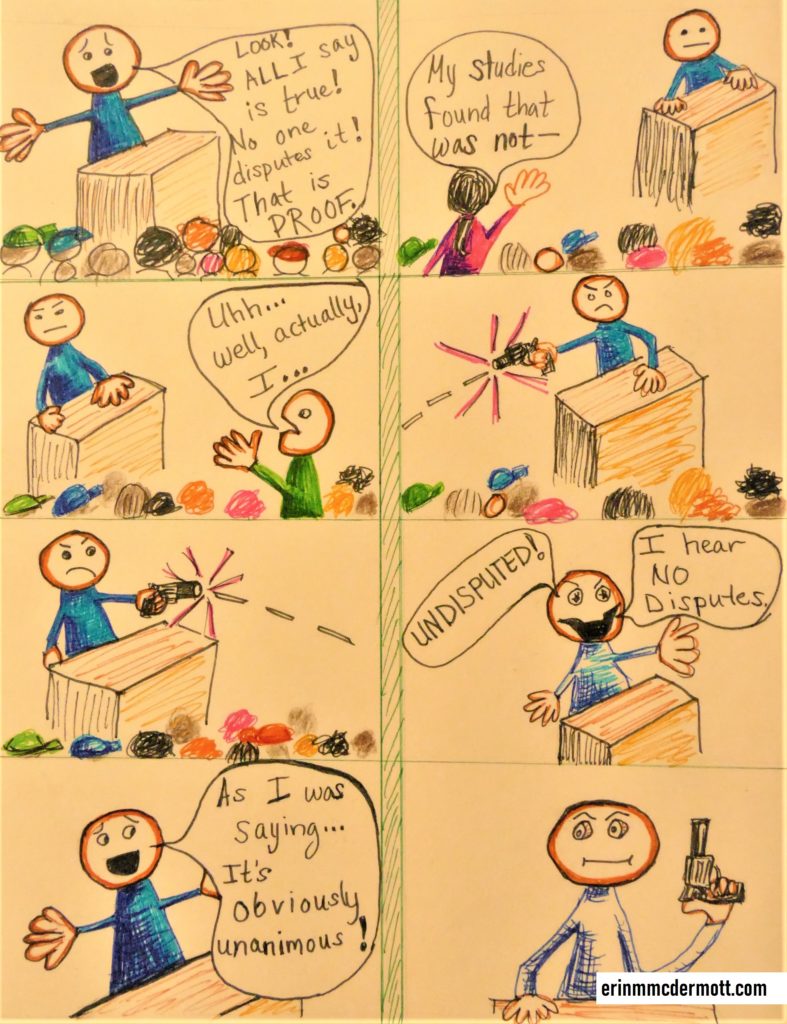
Another IRONIC argument I heard to discredit these doctors (and again, whether their warnings had merit or not was not the subject), was that the commenter had not heard similar comments elsewhere. They believed that because large governmental bodies held particular views and because they hadn’t heard a loud outcry against those views, the powerful authoritarian voice must be correct. It’s undisputed, after all.
Aside from the paradoxical ridiculousness of this notion in its own right, I have indeed heard many other doctors dispute the way our omniscient overlords are handling all this mess. I wonder why my friends hadn’t heard of them…
Senator Scott Jensen of the Minnesota State Senate springs to mind first. He is both a representative and a practicing family doctor. Jensen wears both hats at the same time, and so has a particularly interesting perspective. I believe it was a 2-part video on Twitter where I first saw Dr. Senator Jensen (or Senator Dr. Jensen?) You can watch the first one here so long as Twitter doesn’t take it down.
State Senator and practicing Medical Doctor Scott Jensen is one of those other dissenting voices my friends say don’t exist.
Dr. Jensen publicly spoke out on disturbing things he’s seen. These included the handling of death certificates in regard to COVID-19 and the way this disease is being described to the public. Now, Jensen is being investigated by the Board of Medical Practice in Minnesota for those statements.
“…doggone it, if this could happen to me, my view is it could happen to… anybody.”
– Senator Dr. Jensen
Jensen also expressed deep concern over bureaucratic moves regarding COVID not aligning with what he sees as prudent measures from a medical standpoint. In fact, by how he describes some government mandates and information reported by authorities, it might all be more aptly labeled as deception.
Of course, there’s also Dr. Dan Erickson and Dr. Artin Massihi from California. Oh, but they were “debunked” when some articles were slapped together to question a portion of the many statistics they mentioned in their now blacked-out broadcast. Gotcha. So we can just call them quacks, too, and hand-wave away all their concerns, right?
Did you also read a fact-check/debunk/smear piece on Judy Mikovits and so now you have the social permission to dismiss her or roll your eyes and say you know better than to listen to a word this scientist says? But is it even possible to dismiss someone if you don’t have the chance to listen to them in the first place? That film tied to her name was found to be so “dangerous” it was banned…
So, is that all it takes now? Just one mocking, ridiculing article from an opposing side and the American people are rendered incapable of critical thinking?
“We Need Big Brother to Burn Books For Us”
Other comments on my wall voiced worry that other people are foolish and have difficulty with their critical thinking. Granted, this part was hard to deny in the face of the general thread. However, there was one espousal to the claim that it is the duty of higher authorities to protect common folk from their own feeble minds.
So we’re back at the point in the human social establishment cycle where we’re burning books again? Is that where we are? We’re afraid of words?
If you’re of a pro-book burning mentality, maybe you wonder why we can’t just let one main, overarching body mandate procedure for all peoples in situations of limited understanding. I’ll tell you exactly why.
The Danger of Removing Doctor’s Discretion
Even before COVID, it was difficult for doctors in certain situations to act in what they believed to be the best interest of their patients. What follows may just be an anecdote to you. To me, it was vivid, excruciating proof of how dangerous it can be when doctors play strictly by the book instead of being allowed to use their own critical thinking skills to “do no harm”.
In January of 2017, I admitted myself to an emergency room in Manhattan. I had one request: to be tested for a rare disease that can only be accurately tested for during an acute “attack”. There was most definitely an acute attack going on.
Many incomprehensible things happened during my “treatment” over the next several days. I was in a tremendous amount of pain and the testing they put me through in that condition added to the pain in a way I can only describe as true torture. In the past, without medical intervention, these attacks have brought me to beg God to take my life during the peak moments I suffered through them. I didn’t know it was possible to feel even more pain than that until I began to receive medical attention for the first time during one of these episodes. In the hospital, it was difficult to speak for myself and advocate for what treatments I accepted or wished to refuse. I was alone, I was weak, and I was at the mercy of “best standardized practices”.
Me modeling one of the treatments I tried feebly and ineffectively to refuse.
After initial test results came back, the several ER docs, students, and specialists all stopped by to tell me I had a different disease because it was more statistically likely than what I asked to be tested for, and statistics rule decision making in the hospital. They never tested me for the disease I asked to be tested for.
Standard protocol for that common disease was to put the person on an IV drip of a certain flavor of antibiotics. A nurse stopped by to attach a bag to my arm without telling me what I was prescribed. I had to ask as it was drizzling into me. “Oh this is common for what you have. It’s just an antibiotic.”
I snapped a picture of the bag because I knew in my mental state it would be the only way I could remember later what they put in me. I was also extremely skeptical of their record-keeping procedures at this point.
Relevant data for would-be murderers.
Shortly after the drip started, I went from unimaginably bad to somehow worse. My heart began to race, and I broke out in a sudden sweat. The feeling of impending doom that I sometimes typically feel at the beginning of an attack escalated to a level I’d never experienced before.
Two doctors happened to come in to check on me as this was happening. I asked them to turn the drip off. They told me they would not because this was a standard drug for what they were guessing I had. I then instructed them to turn it off. They still refused. All the while, the physiological symptoms increased. Then, I rapidly started to lose my peripheral vision to the point I was nearly blind. And then I finally found my voice. “TURN IT OFF! TURN IT OFF! I CAN’T SEE. I’M GOING BLIND! TURN IT OFF OR I WILL RIP IT OUT OF MY ARM I SWEAR TO GOD.”
They turned it off for a while, discussed it, and decided I couldn’t have been experiencing anything from the drug because not enough had gotten into me to cause a reaction. Then, they turned it back on.
Several minutes later, as I dragged myself out of the ER bathroom, IV stand in hand, I ran into one of the doctors and told her it was happening still. I said she could put me on a different antibiotic but this one needed to stop. She put her hand on my chest and felt the sweat and whispered, “oh shit… You’re right.”
I was switched to a different drip and didn’t have a problem with that one. Then, I was admitted to an actual hospital room. When the nurse in the hospital room was going over my personal data I asked if the antibiotic that nearly blinded me was on my list of “don’t even think about it” drugs in his records. He said there was no mention of it. I had him add it to my records and showed him the photo of the IV bag because it was the only record I myself had of the name of the drug.
This was all extremely upsetting, but I haven’t even reached the point of this unreasonably long tangent…
When I was released, the specialist who shoved cameras up my ass and down my throat during some additional testing told me my problem looked absolutely nothing like the disease they’d been guessing it was. Yet because they still didn’t know what the hell was wrong with me, the diagnosis would remain as that same statistically likely but incorrect diagnosis. Because statistics. Because common practice has it that hospitals don’t get sued when they just make decisions according to statistics.
I was then given a prescription to get filled when I left. Guess what the prescription was.
I’ll give you 2 guesses, but you only need one.
They prescribed to me the drug that they witnessed me having a devastating reaction to. I asked the professional who gave it to me, “uhh, what the hell is this? You should know I had a reaction in the ER. I nearly went blind and passed out. I made sure this was on my record so you didn’t give it to me without my knowledge in the hospital room. Why are you giving me this prescription? Why didn’t you even warn me that this was the drug I couldn’t tolerate?“
The medical professional looked flabbergasted and then said, “uhhh.. let me check.” He left the room to have a meeting about the situation and when he returned he told me, “well this is what we have to prescribe you when you have the disease we diagnosed you with. It’s standard procedure. We have to.” And then he whispered, “but it’s up to you whether you want to get the prescription filled or not…That’s up to you.”
Several days later when I’d recovered enough from being hospitalized that my brain could work well enough to do a simple Google search, I found something interesting. There is a list of drugs that could potentially kill a person with the disease I’d asked to be tested for. The antibiotic that caused no reaction in me was on the “safe to prescribe” list. The antibiotic that seriously fucked me up was on the “we don’t know for sure but there’s a chance this could seriously fuck up or kill a person with this rare disease” list.
So, if you didn’t get the meaning of this tangent – the topic of doctors being able to use their own sound judgment at their discretion is fucking personal. Invariable rules laid out by a hospital’s insurance company or a medical board should not get in the way of what a doctor knows to be best for his or her patient. And if those rules are seen to cause harm, directly or indirectly, doctors need to have the freedom without fear of retaliation to question, to speak out, and to practice their art.
When doctors are made to be more afraid of losing their license or of ostracization than they are of causing or allowing bodily harm to their patients that is a big, big problem.
MF Heroes
While many of my friends see a bunch of doctors standing on Capitol Hill as quacks simply because a biased rag published a smear piece on 1 of them, I see that group differently.
I see several individuals who invested more time and money into their careers than most Americans would care to imagine doing for themselves. I see a few who have been scared they will lose that career they built, their livelihood, their reputation, and their ability to provide for their families if they spoke out. And yet, they still spoke out.
They have so much to lose, but what do they have to gain by being there?
I see a group of doctors who each, independently, came to the decision that it was more important to protest a higher authority than to yield to it. I see doctors who must truly care about Americans’ health whether you agree with their perspectives or not.
I see heroes. And they’re ticked off. I am, too.
I also see a different type of hero in all of this.
At a time when a historic NASA-SpaceX mission is making a landing, I find I’m much more in awe of another industry. I actually toyed with the idea of training to become an astronaut when I was a tyke. However, the idea never really filled me with excitement. No, there weren’t any roles I saw in society that I found truly admirable and inspiring until about 8th grade when we learned about Muckrakers.
These were the badass investigative journalists who exposed corruption at the turn of the last century. These men and women went to great lengths to do so including risking their safety or chance of prosecution. Most exciting of all, they uncovered truths for the public to view which often led to real reform.
On Capitol Hill last week, if it weren’t for the Breitbart News stream Matt Perdie filmed, millions of people might not have heard those doctors’ voices. But was that “muckraking”? Wasn’t it rather just regular, old, unbiased reporting?
I think it was both. And that’s a scary thing. When a supposedly far-right syndication is doing something controversial by simply airing an unedited broadcast when experts speak at a press conference, that should raise alarm bells in all of us.
Most of all, that should immediately concern other news outlets. If vitally important, apolitical content continues to be absent on moderate and left-leaning outlets, ya’ll are going to drive people to the other side of the aisle just to get their regular news.
At some point, though, we sometimes have to give our swollen arteries a breather and call it a Matthew 7:6 moment. So for me, right now, this “cast” is over; I’m signing off.
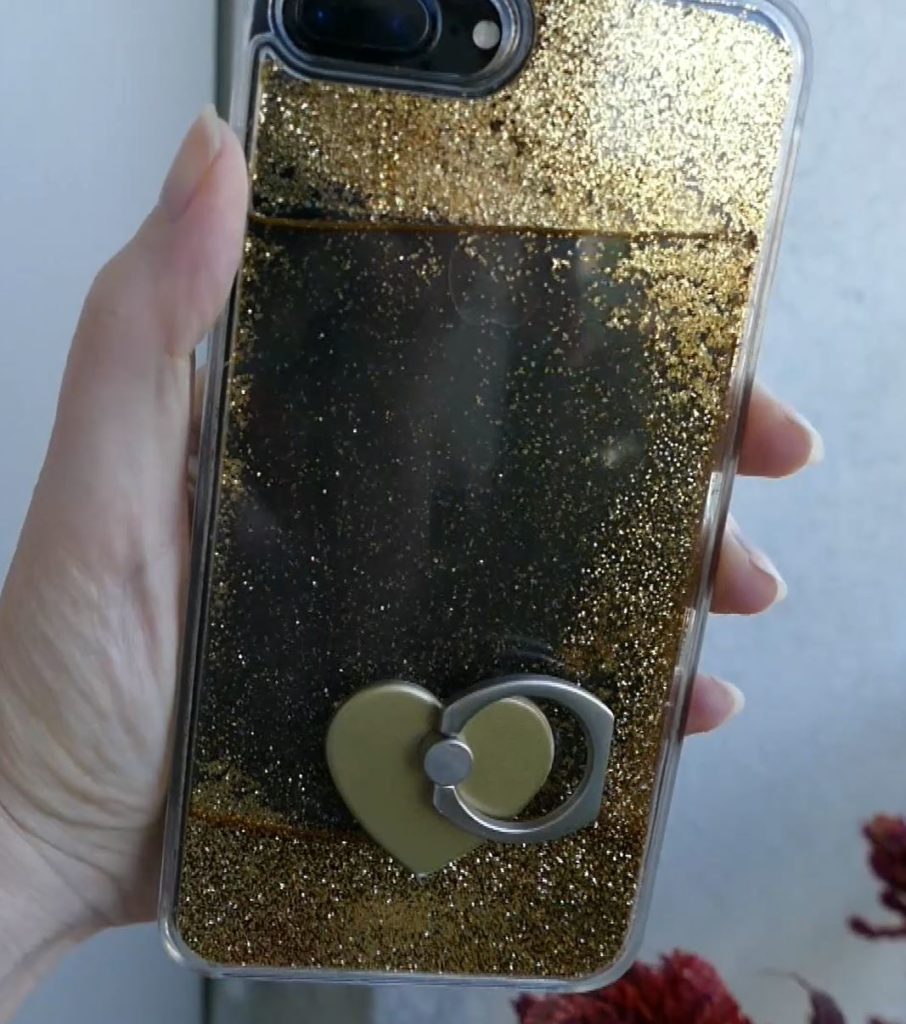
My liquid, gold glitter-filled iPhone 7 plus case has distracted my friends enough times while I was speaking (to the point they were 100% IGNORING ME, WTF) that I figured ya’ll might want a video of this thing.
So here you go:
The famous gold glitter iPhone case IN ACTION.
The famous gold glitter iPhone case IN ACTION.
TRY TO LOOK AWAY.
This thing is like moving sand art. A poor man’s meditating device. With Sparkles. And it’s stupid fun to play with!
When I got it, it was an emergency purchase to keep my phone from falling THE REST OF THE WAY apart the night before I was about to be off-grid and stranded for several days. It just so happened to be one of the only few cases at the store that fit my iPhone 7 Plus. If there were other options, I might not have chosen the whimsical snow-globe-like gold glitter waterfall iPhone case. That would have been a mistake.
Magical, floating, swirling, gold flakes of glitter to soothe you wherever you take your iPhone.
This is a similar liquid glitter case for an iPhone XR:
Here’s a similar one for iPhone 7 Plus and iPhone 8 Plus:
Heart finger holder thing sold separately — here’s a similar one (other colors available at same link):
I really like the Amano holder by bullz-i inc. better, but unfortunately, I needed to make an immediate purchase when I got the heart holder thing at a brick-and-mortar. If you have time to wait, I’d get this one instead:
I met the guys who built these at Hardware Massive‘s HardwareCon and heard about all the arduous engineering they put into this deceptively simple-looking loop. I put one on my last phone, but it outlasted the phone! (That’s why I had to get a new one…) You can read more about the Bullz-i product portfolio in the article I wrote for SolidSmack.comHERE.
Disclaimer-doo-dad: As an Amazon Associate, I earn from qualifying purchases.
Should I make more of these types of “my favorite things” posts and videos? Let me know, if so! (Or if not.) 😀
First of all, let’s get those quasi-kinky, faux S&M thoughts out of your head . . . this post has nothing to do with the movie.
This is the first part of the Surface Thinkers’ Rx Series, where we challenge our brain machines to look a level deeper. We explore a thing called “critical thinking” where we search for an understanding that lies beyond spoon-fed conclusions.
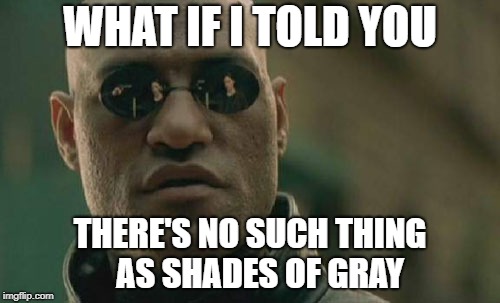
The term “Shades of Gray” seems like a great place to start — it’s a basic, widespread idea which is easy for our visual brains to latch on to. It’s also completely fucking wrong.
In English, we use the term, “shades of gray” to express an understanding that lies beyond the cold, hard edges of perceived reality. Usually, if someone is said to see the shades of gray it’s a compliment to their superior empathy and perception. I remember in an episode of Ally McBeal, a t.v. series from the late 90’s, the term was used to poetically paint the perceptions of the main character. For those of you who don’t remember, Ally McBeal was a ridiculous woman who let lovesickness dictate her career choices. And yeah, I watched way too many episodes.
But . . . what if . . .
Take, for example, this image of a newspaper image of an orca in the real paper version of The Seattle Times:
This image made from an image in The Seattle Times, June 17, 2018.
What shades would you say made up the whale? Maybe you would say, “black and white”. Orcas are black and white.
But then maybe some ass-licker student raises their hand in class and says, “actually, there are many shades of gray in this picture. The white isn’t actually white if you look closely. It’s gray!”
Well done, Ass-licker!
Actually, sorry Ass-licker, your arrogant notion that you hold a truthier truth than truth — that there is no such thing as black and white — is wrong.
Let’s look closer.
Close-up view of that orca.
Even closer:
Super zoomed-in zoomy look of that same orca pic.
Now we’re close enough to see what every printer already knows.
If you zoom in far enough, you see this image wasn’t printed with black, white, and 20 shades of gray ink. It was printed with varying sizes of black ink dots. There is ink. And there is “not ink”. This image is binary. Yes or no. Right or wrong. At the whitest parts, you can see there is no ink, not a light shade of gray ink that got stamped down.
There is no gray.
So when you’re given a headline, and then you’re fed a different headline with a little extra info that makes you think there may be no right or wrong answer to a problem . . . that is not your cue to say, “well, I guess there are many shades of gray in this world and there is no right answer. Absolute truth is a fallacy.”
No.
That is your cue to think, “well, shit, I guess I need to go a lot deeper down and learn more specific details about this topic to understand it clearly.”
If you see shades of gray, you’re not looking closely enough. Put your swim mask on and dive beneath the surface of understanding. There are really fucking cool tropical fish down there. (And black and white orcas.)
Me hunting Nemo in Thailand. Photo credit: Suzanne van der Veeken.
Do you cling to the surface of understanding like these thrown-overboard-undesirables cling to topside to breathe?
Photo credit: Hakan Norberg
If you read a headline, do you investigate further before you consider the headline part of your vast wealth of understanding? Or do you cockily throw that half-assed version of understanding on the table during group conversations like a merit badge representing your intellect?
Do you think many things are obvious?
Do you think ALL things are to a degree obvious?
Do you scoff and say, “well obviously,” a lot?
My friend, if you answered, “yes, no, yes, yes, yes, yes,” you might be a surface thinker. But fear not! The vast depth of beauty lying beyond that reflective surface Narcissus fell captive to is accessible to you!
If someone asked you to estimate the number of fish in this cove, how could you count all the sardines from the top? It’s only by submerging down into the depths that you can number the layers.
“Under the sea, Under the sea, Darling it’s better, Down where it’s wetter, Take it from me.” Me Swimming with Sardines in Thailand. Photo credit: Suzanne Van Der Veeken
This is the beginning of a series of posts called, “Surface Thinkers’ Rx”. I want to give you alternate viewpoints to consider . . . viewpoints that I believe can assist you in understanding not just the topics at hand, but also in understanding understanding. I hope to help you learn how to shift your own camera angle . . . and to swap out lenses on the fly.
Question.
Question what you consider to be “obvious” truths. Question in a pure way — not just in a way you are told to question by a group or specific person with an agenda. Otherwise, your “questioning” reverts back to more spoon-fed acceptance of headlines.
Be Curious.
Let yourself find joy in the curiosity you once relished as a child. The curiosity that let you rapidly expand your knowledge and understanding in a way that let’s you survive as an adult. Think of how much knowledge you amassed in such a short amount of time! You became fluent in a foreign language, grasped the concepts of: basic math, social interactions, dexterity, bike-riding, that touching hot shit on a stove can burn you, reading, writing, art, singing, how to maintain a priceless piece of equipment — your human body, and so much more. That is all difficult shit to learn from scratch!! Yet you acquired these capabilities because you were born with a burning craving for deep understanding and mastery. Find that hunger again. Satisfy it for its own sake.
Have faith in the possibility that there is always more to the story than you grasp . . . always more beneath the surface. And remember that this kind of faith is the prerequisite of genius.
Some call it humility.
Put another way, I say hubris is the greatest threat to intellect. Kill your hubris, embrace the depths you do not yet know. Come dive with me, under the sea!
If you’re involved in the engineering of products manufactured globally, chances are you’ve been personally affected by SNAFU’s on an epic scale. Despite your best efforts, you probably had to sacrifice some weekends, or late nights, or quality time with your kiddos, or at the very least, your blood pressure.
Hey, it happens to the best of us, especially if that global manufacturing involves China in any way . . . but before you give up on your blood pressure entirely, let me ask you this: have your best efforts involvedTELEPORTATION?
Before we go over the modern magic of teleportation possible in R&D today, let’s get clear on the process that’s supposed to happen in an ideal world.
First, some socially inept nerds virtually dream up how a physical design should theoretically work in their engineering cave. (It’s OK, maybe you can’t say that, but I can. I used to be that guy.)
Exhibit A: Engineering Nerd Cave
They might not ever touch a physical component in their design work! To the layman onlooker, it might all appear to be math and video games. That’s mostly because it is.
Usually, there are several disciplines involved in this theoretical design stage. The discipline that dictates the other requirements for the system often begins and then hands off specs to the other departments. In electro-optical systems, usually, the optical design is the thing you do first. Then the optical engineer (that was me) would tell the mechanical nerds about the size and location needed for the optics. Also, the optics guys often would tell the electrical engineers about how much juice they need running to an LED, or how much light will turn on a sensor. Then, after those informational batons were passed, the ME’s (mechanical engineers) and EE’s (electrical engineers) would go to work in their own engineering caves to design their respective pieces of the system. Those caves might be down the hall from each other, or they might be on different continents. I’ve lived both scenarios.
Once those circuit designs, mechanical designs, and optical designs are all finished, detailed prints (“blueprints”, but no one actually says that) are often handed over to a factory in some country where stuff is really cheap to manufacture. This might be Mexico, or China, or Thailand, or somewhere else that isn’t the place where the parts were engineered.
Then, everyone waits a while for those parts to be physically made on a different part of the globe and then shipped half-way around the world. Hopefully, it’s not MF Chinese New Year at the time. It usually is Chinese New Year, though. It just seems to work out that way. So, your 6-week lead time might turn into 8-10 weeks in that case.
Chinese New Year (In Singapore, But Still. Same Difference.)
After the parts arrive back where either the assembly happens or where one of the engineering disciplines live or both, all the pieces are put together physically for the first time! Fingers are crossed. Everyone hopes that when all the parts are connected up and the switch is flipped, the thing a.) does not catch fire, and b.) works like it was intended to.
Of course, everything all working together seamlessly on the first try and on time is a laughable fairytale of a dream.
Maybe the components you used had lousy, inaccurate info on the manufacturer’s spec sheet. Maybe the system ran hotter than your thermal simulations predicted (if you even ran those) and consequently, your LED’s aren’t as bright as they need to be. Maybe your mechanical drafter was working in the wrong units when he created some component and it’s totally in the wrong place in the system. Maybe China put the wrong color LED’s on the circuit board. (Come on, automobile turn signals are not green, China. THEY ARE NEVER GREEN.) Maybe China used the wrong material. Maybe China used the wrong resistors. Maybe China mislabeled a driver. Maybe . . . China.
And maybe . . . maybe on that slow boat from whatever country your components were manufactured in . . . maybe the things just fell off the boat. Like, literally fell off the boat and sank to the bottom of the ocean. That also seriously happens.
Here is a PowerPoint slide I created to illustrate the real-life global R&D process to a bunch of high school mechatronics students in Silicon Valley I lectured to recently. Pretty accurate, and I think they got it:
Real World Example of a Global Manufacturing Process
What happens then, after all those hiccups? Hopefully, the project managers involved had the foresight enough to factor in both multiple design iterations and random China screw-ups. Yet, sometimes, when all the things go wrong at once, even if your Gantt chart had some cushion in it, your project ends up months behind. Then what?!
Well, if your product is low-tech and not timing-critical, maybe you just push out that anticipated release date.
However, if your product is, say, a 2018 Cadillac Escalade, it needs to be ready to roll by 2018. Otherwise, if it comes out in 2019, it is not a 2018 Cadillac Escalade! So what then?
Well, then comes shouting, migraines, missed birthday parties of your children, high blood pressure, occasional heart attacks (no joke) and the tears of fully grown men (also not a joke). Seriously, I’ve seen more grown men cry than I’d like to recall. 98% of those instances were in professional engineering settings.
Or . . . or you can salvage some of that lost time with teleportation!
Teleportation?!
Yeah! Well, kind of. It’s more like the next best thing.
With the technology available today, we don’t have to wait on manufacturing in another part of the globe before we figure out if a design itself is valid! Your engineers in the USA and Europe and Timbuktoo can all (nearly) instantly have each other’s designs physically in-hand. Moments after a design iteration is figured out in Munich, the parts in that design can begin to be physically created in real reality in San Diego. Actually, those designs can be immediately made into tangible parts in more than one place. Today, you can teleport AND CLONE prototype parts, too!
How is this possible?! If you haven’t figured it out yet, I’m not really talking about teleportation (ORLY?) – – I’m talking about rapid prototyping of parts using 3D printers and PCB printers.
If several R&D facilities scattered across the globe have the same rapid prototyping equipment, they can shoot electronic blueprints of new part ideas to each other at the speed of light! Then, engineers can create and hold in their hands nearly identical copies of those parts and begin assembling and testing entire systems before China ever turns on injection molding or SMT machines.
Beam THAT up, Scotty.
3D printing along with the more general processes of additive manufacturing have been around for a while. It’s just now, though, that the quality of the parts possible and the variety of materials make so many of a design’s mechanical parts teleport-able. You can print metal parts! You can print optical quality lenses (https://www.luxexcel.com/)! You can print parts with carbon fiber or even Kevlar (http://impossible-objects.com)!
Printing circuit boards is a much newer thing to become easily accessible — especially if your design uses flex boards. If you’re not familiar, flex boards look like this, and they’re . . . well . . . flexible circuit boards:
Flex Board printed on a BotFactory PCB Printer!
Other older technologies are available to mill out circuit boards from rigid substrates, but they’re messy and can’t make these fancy flex boards which for many applications can’t be substituted in the prototyping stage.
BotFactory takes a unique approach to this in that their desktop PCB prototyping machines print conductive and insulating inks to build multiple conductive layers (like the wires of a circuit board). All their machines come standard with pick-and-place capability, too, so that means you could create the totally completed circuit board – with all your components on it – that France dreamed up and turned into a Gerber file minutes ago, right now from your desk in the USA . . . Or, Timbuktoo. (Whatever, you do you! I’m typing this from Bermuda, so hey.)
When I came across BotFactory’s technology, I thought back to all those migraines and man tears when China completely messed up a circuit board. I thought about all those weekends I lost when I had to make up for wasted time in the prototyping stages of electro-optic system design. And then I thought,
“engineers need this! Me from yesterday needs this!”
So now, I’m helping to spread the word about BotFactory‘s amazing tech. If you want to be able to print out and assemble multi-layer PCB boards, even flex boards, from your desktop and save gobs of development time in the iterative prototyping phase of R&D, shoot me an email. I’d be happy to learn about your current challenges and talk with you how teleportation technology can help:
Now, is this teleportation stuff a substitute for testing first production parts made in Asia? Unfortunately, no. You still have to make sure China didn’t swindle you on material quality and put the right parts on all the things, and etc, in the stuff they’ll ultimately make for you in mass production. But for the most time-consuming system design phases, especially within multi-national corporations, you could easily save months in a project. Literally months!
Plus, perhaps most importantly, for the optical enginerd near and dear to my heart, that’s less time proving a Chinese factory screw up was to blame for a system failure and not an optical design.
For those of you keeping tabs, I’m still alive, yes. Woohoo!
It might not still be so if not for the wild and wise character, John Stryker, of Strykermotors.com.
A couple months before the point of scraping my last pennies together, John approached me about potentially working together in the future. He told me how his successful Jeep parts side business was getting raped in eBay fees – as much as $1,500 per month.
My response: “Woah, wait, hold up. If that’s how much you’re paying in fees, you must be making some substantial profits. This is your side business, you say?!”
“Yeah. Yep. That’s right,” was something like his response.
John told me he’d like to get a snazzier website up and running where he could sell products directly and bypass most of the middle man fees. He knew I dicked around with random website building stuff and he’d guessed I could figure out how to make him an eCommerce site. Turns out he guessed correctly! We chatted and agreed it sounded like a good idea.
It was March at the time, and I was in the Florida Keys hoping the sun would somehow help me regain some strength after the latest battle in the war for my health. We talked about this work happening sometime in the hazy future.
Then I got back to New York City, and the reality of my dwindling bank account came closing in at an accelerated pace. I would soon have absolutely nothing left. Not very little left – absolutely nothing. I pinged John Stryker.
“Oh hey, so . . . about the stuff and things you wanted me to do for you. How’s about now? Now would be good for me.”
We chatted more. On the phone, we discussed all his annoyances with the systems he has to work with now, and what his ideal working world was like. He told me what he envisioned and hoped for with the new website. As John has a lot of work to do on the back end of the business – including buying Jeeps, ripping Jeeps apart and creating new, individual listings for each used part for sale – a key focus of the new site’s capabilities would be automation. Automate, automate, automate everything we could.
So, everything from shipping label creation to social media posts would be connected and automated as much as possible. We would put a lot of extra work into the site up front so that machines could make life much easier for John and his workers in the future. We talked about Tim Ferriss and my love for Four Hour Work Week. . . multiple times. Like a good groupie, I suggested he read the book . . . multiple times. (Incidentally, if you haven’t read the book . . . check it out!)
I drew up a proposal encompassing all John’s needs and desires and estimated (with some padding included) that the site would take me about 2-3 weeks to build.
Of course, scope creep happened. But it was completely on my side. I added in a lot of apps and functionality and redid some things to make sure they were as spiffy as possible. Damnit, this thing was gonna work and work well! I also decided to import John’s used parts in addition to the new parts he sells and underestimated what a pain in the ass that would be. The guy’s got over 400 parts for sale! They’re all fucking different! Which, aside from being annoying for a web developer type person, is pretty astounding considering John and his team carefully procured each piece by hand!
Something like 2 months later, we’re finally finished!
Best of all (for me) each payment from John was super prompt and saved me from bankruptcy in the nick of time! It’s been a really wild last couple of months. Part terrifying. Part thrilling in a good way. And 100% elated that things are up and running!
By the way, I can’t take credit for the amazing Stryker Motors logo. That’s all John and his lovely lady who created that! It may not win a prize in modern art — and really, who would want one of those anyway — but it’s cute as hell and without a doubt, memorable, which is way more important.
If you’re a Jeep lover, driver, mudder, or love someone who is, check out:
P.S. John Stryker (who is also an engineer by trade) is starting to create How-To content in blog and video format. If you have any requests on learning how to repair or replace something on your Jeep, send a message to John here:
Over the past year and a half, I’ve helped business leaders in over a dozen industries. I’ve amped up companies in all sorts of ways — from market analyses to business development to direct sales, copywriting and more. Between various industries, companies, personalities of leaders, sexes, nationalities some issues and needs remained the same. Here, I’ll share some of the preliminary parts of the growth hacking process I lead business owners through to save you some pain and help you to increase your revenue.
I’ll also share some of the red flags I point out. When enough of them are ignored after I wave my hands wildly in their direction, light road flares, and sound bullhorns, they lead me to cut and run.
This blunt list may seem harsh, but would you rather have someone BS you than have a real confidant on your side who wants to see you succeed? ‘Cause I don’t BS. If you want that, you’re on the wrong site. I’ll love you tough-love style, and I’d rather you hate me than walk blindly off a cliff. It’s how I do.
Why Does Your Customer Give a Shit About Your Product/Service? This is the A-Number-One Question every business owner should be able to answer and repeatedly FAILS at over 80% of the time in my experience. I’ll hear things like “it’s the fastest/bestest/coolest/smartest product/service like it on the market!” If your answer sounds like this, it is almost always the wrong answer. I’m a big fan of the marketing guru, Jay Abraham, and one of his rules is, “be more in love with your customer than your product or service.” If I hear something like the example I used above, I know the business owner is getting off on the awesomeness of the thing he/she created rather than getting to caringly know his or her customer. Put the mirror down, stop thinking of your imaginary bank account for a second, and spare a thought for the people you should be serving. Another clue to me that you don’t have a clue is if you only have a single answer. Oftentimes, there will be several customer segments for the exact same product, and each will find a different #1 value in what you offer. For example, when I experimented in direct medical device sales, the customer was always the same, one might think: a doctor of a certain specialty. Yet, depending on if that doctor worked in a large or small private office or in an ER setting, there were 3 totally different top benefits that would be most effective to grab the potential customer in conversation. If you think you know your customer enough, ask yourself how you can go one level deeper. Then, ask again. The research I do in 2 days of direct, cold sales contact is often far more valuable than what full-time researchers unearth in 6 months’ of digging because I know how to ask the important questions and listen. LISTEN!
Masturbatory Monologuing Yeah, you read that right. Let me explain the term with a little story. Back many, many years before the days of Tinder, I liked to play a risky game when I went on business trips. Once I arrived in the new city, I’d post a Craigslist ad looking for someone to take me out for beer. Then, I’d go get ready while the responses piled in. Sometimes, I would ask a trusted friend to login to my email and remotely pick one for me while I applied my eyeliner. Then, I would ask that friend to call the cops if I didn’t tell them I got back to my hotel by XX:XX time. I never died. This is all to explain that I used to creep on Craigslist personals, and would see those CREEPTASTIC ads for guys who just wanted women to show up to a parking lot and watch them masturbate in their car. They didn’t need any verbal exchanges or even physical contact. They just wanted someone to watch them work their own magic on themselves. I think of this imagery every time a business owner, often male, will say they want to hire my services but will only want to talk to me about how amazing their business idea is and how rich they will get. Red Flag 1. Red Flag 2. I might bring up several glaring, grievous errors in their business plan and simple ways to remedy them. If they then hand-wave away my very obvious and grave concerns or refuse to fix them, then, “excuse me sir, but why in the fuck are you wasting my time asking for my advisement? Oh, I see, this was just some masturbatory monologuing.” And, Red Flag 3. Red Fla–. *POOF* I’m gone. How to fix this one? Be aware. Then, don’t do it. If the end of your speech doesn’t have a tangible possible outcome, besides me not working with you further, just stop.
Have you figured out what metric equals “success” and what it will take to get there? This one, most business owners tend to be better at, but still haven’t thought all the way through. Every new initiative or expenditure should be thought of as a test. A test is only worthwhile if you know how to categorize the outcome as a win or a fail. What would the extra $ spent on X marketing need to yield in additional revenue or number of new clients for it to be considered a win? Precisely how many more dollars should each hour of pounding the pavement bring in for it not to be a complete waste of time and blisters? How many clients/packages sold/projects awarded do you need per month/year to cover your expenses and be worth your time? Once you figure out the exact dollar amounts or number of new customers that classify a win, actually take a moment to tally up the score! This is something I do for myself when I’m working with business owners. It makes moving to the right opportunities from the time-wasting ones a lot easier and faster when you take your emotions out of it and base decisions on hard numbers.
“I Don’t Want To Tell Anyone Because They Will Steal My Idea” This one is kind of the opposite of #3, in that the business owners want to do in private what the #3 sin person wants to do on display. If the chances of someone else stealing your precious idea, and then funding and committing to the hard work of building the idea out into a viable business is higher than the chances of you doing the same, then you fucking deserve to have it stolen. The hard work is the hard part and seemingly novel, brilliant ideas are rarely novel or even brilliant. Whatever you do, don’t tell people you won’t tell them your idea without signing an NDA because you’ll just sound like an arrogant, ignorant, green prick. That’s exactly what they’re thinking even if they don’t tell you. Tough love, man.
These are more than just my personal red flags, peeves or means of judging a business leader. These are the top ways I reliably predict whether a business is screwed from the get-go, or has a shot at becoming viable. If I look back on the businesses I worked with, the owners who were able, with some coaching from me, to deeply understand their customers, collaborate widely and determine success metrics were the ones who succeeded. They saw their customer bases increase, their crowdfunding campaign succeed, their revenue increase, they dodged proverbial bullets like fucking superheroes . . .etc.
And the red flag wavers? What happened to them? Well sadly, after I ran from those opportunities like I’d run from a nutter waving a pinless grenade, they stagnated. Those businesses still don’t even have a working product today, long after they predicted they would have one. It’s too bad. Their ideas were pretty good. But like I said: that’s not the hard part.
It genuinely makes me sad, because I want to see these people and companies succeed. Yet, if I didn’t walk away from the time-wasters, I’d be making the same mistakes they do, harming my own bottom line. On the other hand, with those I continue working with, I become emotionally invested in their successes and rejoice when they hit targets as if they were my own!
If you’re at a point in your business where you need a leg-up, some honest feedback and the opportunity to bump up revenues and your customer base, feel free to get in touch via the Contact Form here. It starts with a free, no-obligation consultation where I intimately get to know what’s working for your company and what’s not before I propose action items in a custom-created package for you. Those items may include adding functionality to your website, focusing on more lucrative customer segments, getting more value out of everything you’re already doing, copywriting, or even making introductions to investigate partnership opportunities. And don’t worry, I’ll be gentle – to start.
If you’re in the New York City area, I’d be happy to come meet you, or otherwise, phone conference or Skype with you. I’d look forward to getting to know you and your business, and most importantly — to giving you the chance to bring in more revenue!